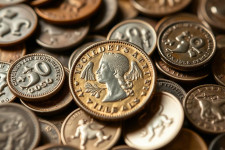
Walking up to an old coin for the first time can feel like approaching a small, stubborn mystery. Coins carry dates, tiny portraits, and sometimes tarnish that makes them look like they’ve slept through a century. The way forward is straightforward: methodical observation, a little research, and a cautious touch. This article walks you step by step through the process of assessing an old best coin identifier app value—what to look for, which resources to trust, and when to call in an expert.
First look: identify the coin
Begin with the obvious but essential facts. Flip the coin and note the date, country, denomination, and any mintmark letters (small letters indicating where the coin was struck). Look at both sides—the obverse (front) usually carries a portrait and date, the reverse (back) shows the denomination and design. Small details matter: a worn date can hide digits, and a faint mintmark can change a coin’s rarity dramatically. Photograph the coin under good light from both sides; you’ll be glad you did when you compare images to references later.
Simple identification checklist
- Country and denomination
- Date and mintmark
- Obverse/reverse designs and legends
- Metal color and weight (if possible)
- Any unusual marks, letters, or die varieties
Common identification pitfalls
Don’t assume every old-looking coin is rare. Many modern commemoratives, restrikes, and foreign coins resemble antiques at a glance. Also beware of altered dates and counterfeit mintmarks. If a coin’s look or weight seems off, that’s a red flag to pause and investigate further rather than rushing to judge value.
Determine metal and intrinsic worth
Before the collector market matters, there’s the metal value. Some coins are valued primarily for their silver, gold, or other metal content. Check the coin’s composition using catalogs or online databases, and, when you need precision, weigh it with a digital scale. If the metal content is bullion-grade, you’ll compare it to current metal prices. But remember: collector premiums can push a coin’s price far above its melt value.
| Metal | Typical Coins | How It Affects Value |
|---|---|---|
| Gold | Pre-1933 U.S. coins, sovereigns, many commemoratives | Strong melt value; collector premiums often high for condition |
| Silver | Many 19th–20th century coins; U.S. pre-1965 dimes/quarters/halves | Melt floor set by silver price; condition/rarity add premium |
| Base metals (copper, nickel) | Pennies, many circulation-era coins | Low melt value; value depends mainly on rarity and condition |
Assess condition and grade
Condition is the single most influential factor after rarity. Grading describes wear and eye appeal—terms like “Good,” “Fine,” and “Mint State” indicate how much detail remains. Professional grading services (PCGS, NGC) provide a numeric grade and encapsulation; a high grade from a respected grader can add substantial value. But you don’t need certification to make a sensible estimate. Learn the visual cues: sharp hairlines and crisp lettering point to high grade; flattened features and smooth fields point to wear.
| Grade | Short Description | What to Look For |
|---|---|---|
| Good (G) | Heavily worn; major details visible | Outline visible, but many features smooth |
| Fine (F) | Moderate wear; major details clear | Detail present but flattened on high points |
| Extremely Fine (EF/XF) | Light wear on high points | Most details sharp, slight flattening |
| About Uncirculated (AU) | Traces of wear; nearly full detail | Faint wear on highest points |
| Mint State (MS) | No wear; struck coin in original condition | Full luster, sharp detail; MS grades 60–70 |
Practical grading tips
- Use a bright, angled light to reveal wear and hairlines.
- Compare to photos of standard grades in a trusted guide.
- Look for contact marks, scratches, and cleaning—which lowers value.
- When in doubt, get a second opinion from a dealer or grading service.
Research rarity and historical context
Rarity isn’t just mintage numbers. Survival rate—the number of coins that have survived in collectable condition—matters more. A coin minted in the millions may still be rare in high grades if few examples escaped circulation. Use catalogs (for example, the Red Book for U.S. coins or specialized country-specific guides) to find mintage figures and known populations. Historical notes—wars, coin recalls, or popular hoards—can explain scarcity and influence demand.
Look for errors and varieties
Errors and die varieties attract collectors. Common categories include doubled dies, off-center strikes, repunched mintmarks, and planchet defects. Some errors are common and add a small premium; others—like dramatic double dies—can be worth many times a coin’s normal price. Use online die variety registries and auction archives to compare your coin. Photographs from multiple angles help when consulting specialists or posting in collector forums.
- Errors that usually increase value: double die obverse, off-center strikes, broadstrikes, repunched mintmarks.
- Signs that reduce value: environmental damage, polished surfaces, drilled holes, or amateur alterations.

Use reference tools and price guides
You don’t need to know everything from memory. Several reliable resources can give you a ballpark value quickly. Price guides list recent retail or auction prices and long-term trends. Auction databases let you search completed sales for real-world values. When using price guides, cross-check multiple sources: a single listing can mislead if it reflects a one-off exceptional sale.
| Resource | Strengths | When to Use |
|---|---|---|
| Red Book (Guide Book of United States Coins) | Compact, annual, good for U.S. mintage and typical retail | Initial valuation and mintage research |
| PCGS/NGC Price Guides | Up-to-date, grade-sensitive values; large databases | Estimate for graded vs raw coins |
| Auction archives (e.g., Heritage, Stack’s) | Realized prices show what buyers actually paid | Check realized prices for similar-grade examples |
| Specialized books/variety registries | Deep dive into specific series or die varieties | When a coin might be a valuable variety |
Authentication and certification: when it’s worth it
If your preliminary research points to a potentially valuable coin—especially high-grade silver or gold, or a sought-after error—professional authentication makes sense. Reputable services (PCGS, NGC) encapsulate and grade coins; this often increases saleability and gives buyers confidence. Certification costs money, so reserve it for coins where the potential increase in market value outweighs the grading fee and shipping risks.
When to get a coin certified
- High-value coins (typically hundreds to thousands of dollars)
- High-grade or potentially unique examples
- Suspected errors or valuable varieties
- Before consigning to major auctions
Marketplace dynamics: bullion vs collector demand
A coin’s value lives at the intersection of metal price and collector interest. Bullion coins often track metal markets closely; their value will rise with gold or silver prices. Collector coins, however, are priced according to supply, grade, and aesthetics. Trends shift—popular series come in and out of favor—and social factors (anniversaries, movies, renewed interest in certain eras) can push demand quickly. Track recent auction results for the most reliable pulse on collector demand.
Selling options and precautions
When you decide to sell, choose the channel that matches your priorities: quick sale, highest price, or lowest hassle. Options include local coin shops, online marketplaces, coin shows, auction houses, and consignment through dealers. Each has trade-offs—local dealers offer convenience but may bid low; auctions reach more buyers but charge fees. Always get multiple offers if you suspect real value. Keep clear provenance and documentation to build buyer confidence.
- Get several price opinions before selling.
- Avoid cleaning the coin—cleaning often reduces value.
- Take high-quality photos and disclose any damage honestly.
- Understand fees and timelines for auctions and dealers.
Care, storage and documentation
Preserving a coin’s condition preserves its value. Handle coins by the edges, wear nitrile gloves if possible, and store them in inert holders—mylar flips, coin capsules, or archival pages. Keep records: photographs, weights, purchase or appraiser receipts, and any certification numbers. Good documentation makes selling easier and helps authenticate provenance if questions arise later.
Basic storage checklist
- Gloves or clean hands to avoid fingerprints
- Individual holders (capsules or flips)
- Climate-controlled, dry environment
- Inventory spreadsheet with photos and serial numbers
Red flags and common mistakes to avoid
There are a few recurring errors that sap value or lead to disappointment. Never clean a coin with abrasive materials; many otherwise valuable coins have been ruined by well-intentioned scrubbing. Don’t accept a single low offer if your research suggests more. Be cautious with “too good to be true” private deals and know that rare errors command specialized buyers—mass-market buyers won’t value subtle varieties properly. Finally, don’t rely on one source of information. Cross-check, cross-check, cross-check.
Conclusion
Checking an old coin’s value is a mix of careful observation, reliable reference work, and a sense for market behavior. Start by identifying the coin and its metal, assess condition without risking damage, consult multiple price guides and auction records, and only seek professional certification when the expected upside justifies the cost. With patient research, a few good photos, and the right questions asked of dealers and auction records, you’ll turn that little disk of history into a clear idea of what it’s worth—both in money and in stories.

 Loading...